
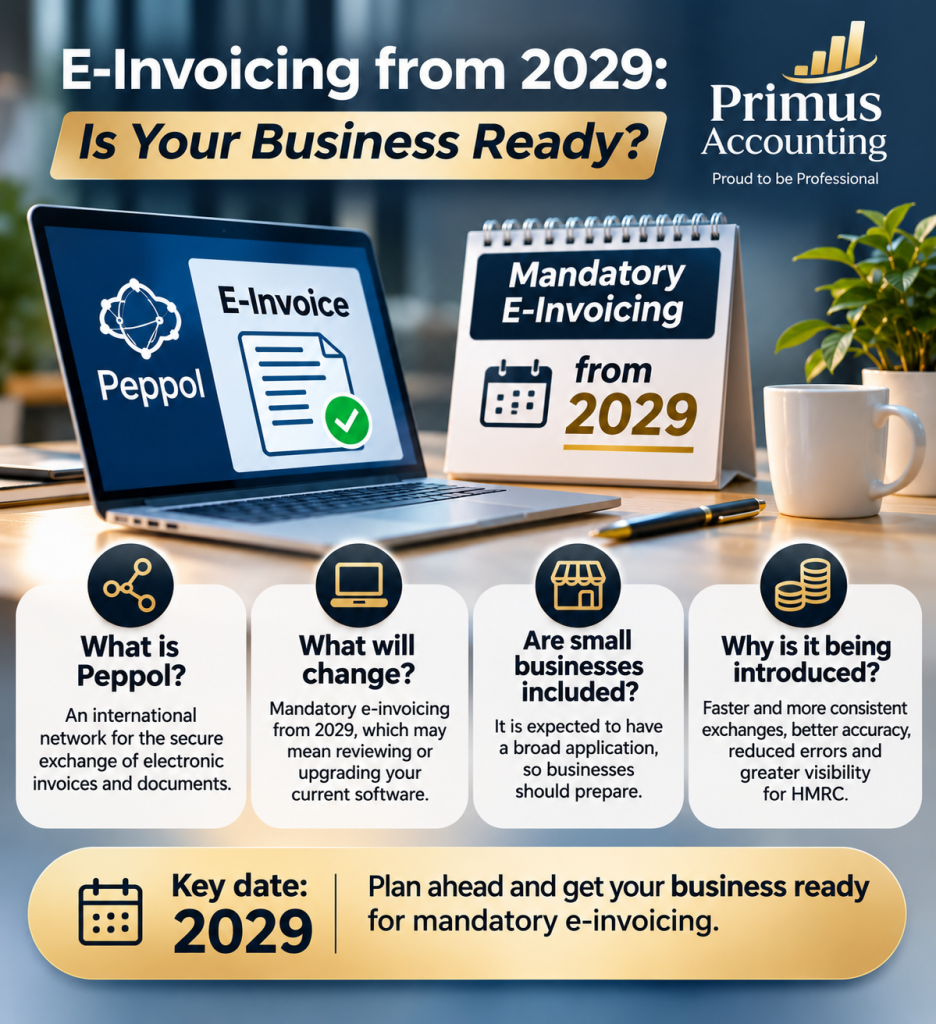
The UK government has confirmed that Peppol will form the core network for the UK’s new e-invoicing system, as businesses prepare for mandatory electronic invoicing from 2029. The move is part of HMRC’s wider drive towards digital tax administration and could mean significant changes to how UK businesses issue, receive and process invoices.
What is Peppol?
Peppol is an international network that allows businesses to exchange electronic invoices, purchase orders and other commercial documents in a standardised digital format. Rather than sending invoices as PDFs by email or processing paper documents, businesses can exchange structured invoice data electronically between compatible accounting and finance systems.
Peppol itself is not accounting software or an invoicing portal. Businesses access the network through approved service providers and compatible software
What will change for UK businesses?
Mandatory e-invoicing is expected to be introduced in the UK from 2029. For many businesses, this could mean reviewing or upgrading their existing accounting and invoicing software to ensure it can work with the new system.
Businesses using older or legacy systems could face the biggest challenge. Moving to e-invoicing may require investment in new software, IT support, staff training and changes to existing accounting procedures. HMRC has indicated that it will continue working with businesses and other stakeholders on how legacy systems will fit into the future framework.
Are small businesses included?
One of the key questions for business owners is whether smaller companies and sole traders will be exempt.At present, the government’s direction suggests that e-invoicing will have a very broad application, and businesses should not assume that being small will automatically mean they are excluded. Although 2029 may seem some time away, businesses that rely heavily on manual invoicing or older accounting systems should start considering how prepared they are for further digitalisation.
Why is e-invoicing being introduced?
Standardised e-invoicing should make the exchange of information between businesses faster and more consistent. It could also improve the accuracy of accounting records, reduce manual data entry and give HMRC greater visibility over transactions. In the longer term, this may help identify VAT errors and make tax fraud more difficult.
However, the transition will also bring additional costs and administrative challenges, particularly for businesses that need to replace or substantially update their current systems.
What should businesses do now?
There is no need to make immediate changes, but 2029 should not be treated as a distant deadline. Businesses should keep the upcoming requirements in mind when choosing or upgrading bookkeeping and accounting software over the next few years. Moving towards digital record keeping now could make the eventual transition considerably easier.
Is your business ready for the next stage of digital accounting?
With Making Tax Digital and mandatory e-invoicing continuing HMRC’s move towards digital reporting, having the right accounting systems in place is becoming increasingly important.
If you are unsure whether your current accounting or invoicing software is suitable for the changes ahead, contact our team. We can help you review your current processes and prepare your business for the move to e-invoicing